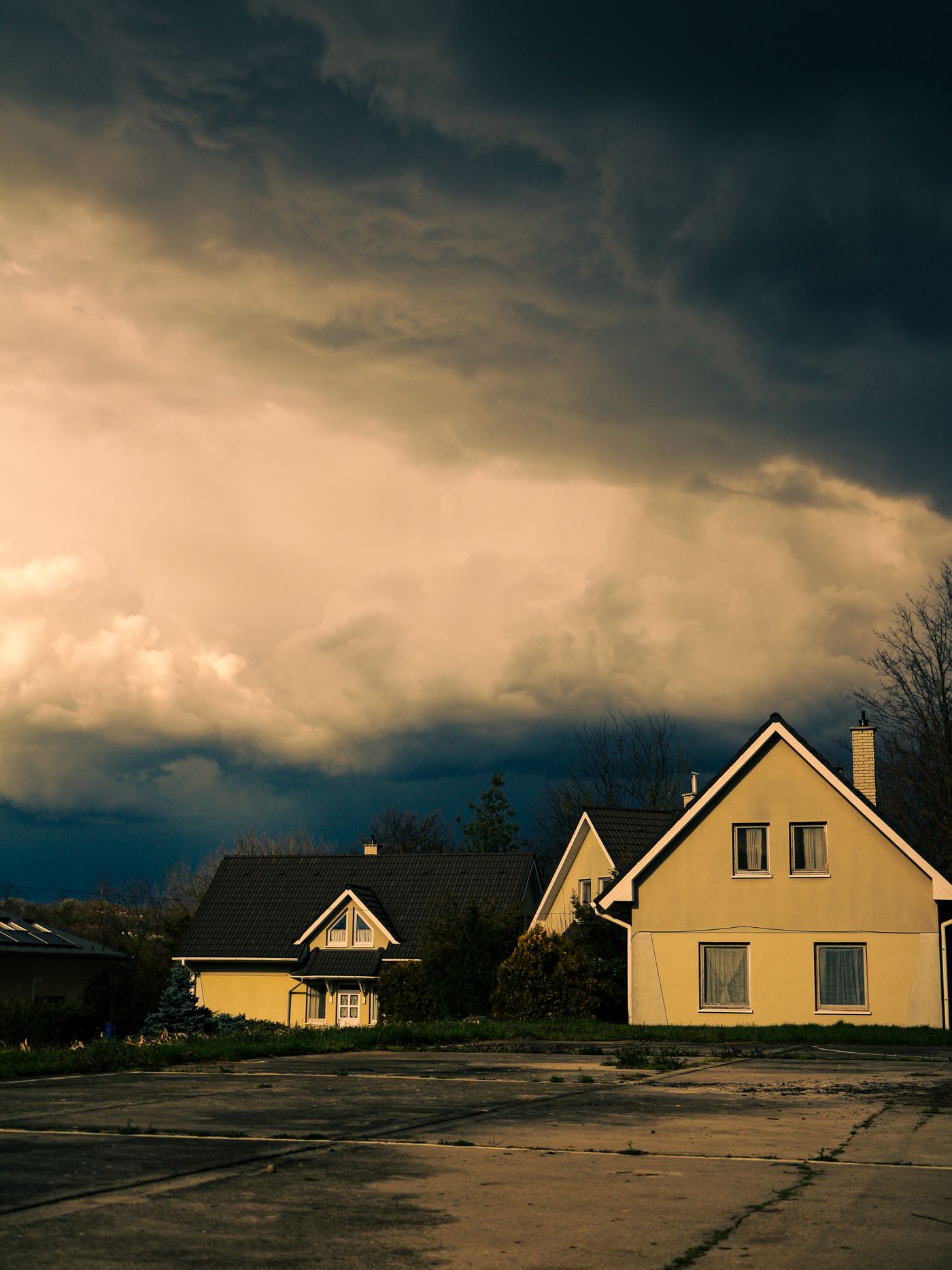
Why Kent storms cause water damage
The Pacific Northwest gets its worst weather from atmospheric rivers, long plumes of tropical moisture that park over the region and drop rain for days. Pair that steady rain with high winds, and a single storm can lift shingles, peel back siding, overflow gutters, and drop a tree limb straight through the roof. Different storms do different types of damage: high winds tear at roofing materials and cause wind damage across the whole roof, while a long soaking rain finds every worn seam. Once the roofing is open, water follows the wind inside. In this damp climate, even a small gap lets rain chase into the attic, then down into ceilings and walls of homes all over Kent.
Storm damage is really two problems at once: the opening in the building and the water already spreading behind it. Fixing one without the other leaves hidden moisture, stains, and eventually mold. Left wet, materials lose their integrity, and that slow deterioration keeps going long after the storm passes. Storm damage restoration is the whole job: make the roof watertight, dry the structure, and document the property damage for your claim.
First steps when a storm opens your roof
A storm-damaged home has real hazards, so start with safety:
- Stay clear of sagging ceilings. A ceiling holding pooled water can come down. Keep people and pets out of that room.
- Cut the power if water is near it. If rain has reached light fixtures, outlets, or the panel, switch off the breaker to that area.
- Watch for downed lines and debris. After high winds, treat any fallen power line and unstable tree as dangerous and keep your distance.
- Catch the drips and call. Buckets and towels help for now. A local crew handles emergency tarping and board-up, then the drying. The crews take storm calls 24/7.
What tarping and board-up buy you
Before any drying starts, the crew makes the building watertight: a tarp over the damaged roof, board-up over broken windows and doors. This is not only about the mess. Most homeowners policies expect you to take reasonable steps to prevent further damage after a storm, and skipping that step can weaken your claim. Emergency tarping protects the home and the paperwork at the same time, while a full assessment of the roof damage and any roofing repairs get arranged. The storm damage repair services the crews provide cover both the opening and the water behind it, so nothing gets left half done.
Chasing the water through the house
Water from a roof leak does not stop where you see the drip. It travels along framing and drywall, and drywall wicks moisture well above the visible waterline. The crew inspects the attic, ceilings, walls, and even window and door frames for trapped moisture, because a spot that feels dry on the surface can stay soaked inside. Wet insulation loses its R-value and holds water against the wood, so it usually comes out. These inspections and moisture readings become the documentation your insurance claims depend on. Left alone, that hidden moisture leads to sagging drywall, stained ceilings, deteriorating framing, and mold growth within days.
Why acting fast matters
The first job is stopping more water from getting in, which is why emergency tarping and board-up come before anything else. From there, drying is a race: mold growth can start within 24 to 48 hours, and a wet attic or ceiling only gets more expensive the longer it sits. Fast action also protects your claim. A clean set of photos, moisture readings, and repair estimates shows the adjuster the full property damage, and insurance claims move faster when the record is solid. Wind, rain, and the occasional hail all leave the same problem behind: water that needs attention now, not next week. The goal is a dry, sound home and peace of mind. Call the moment you find water coming in, day or night.